
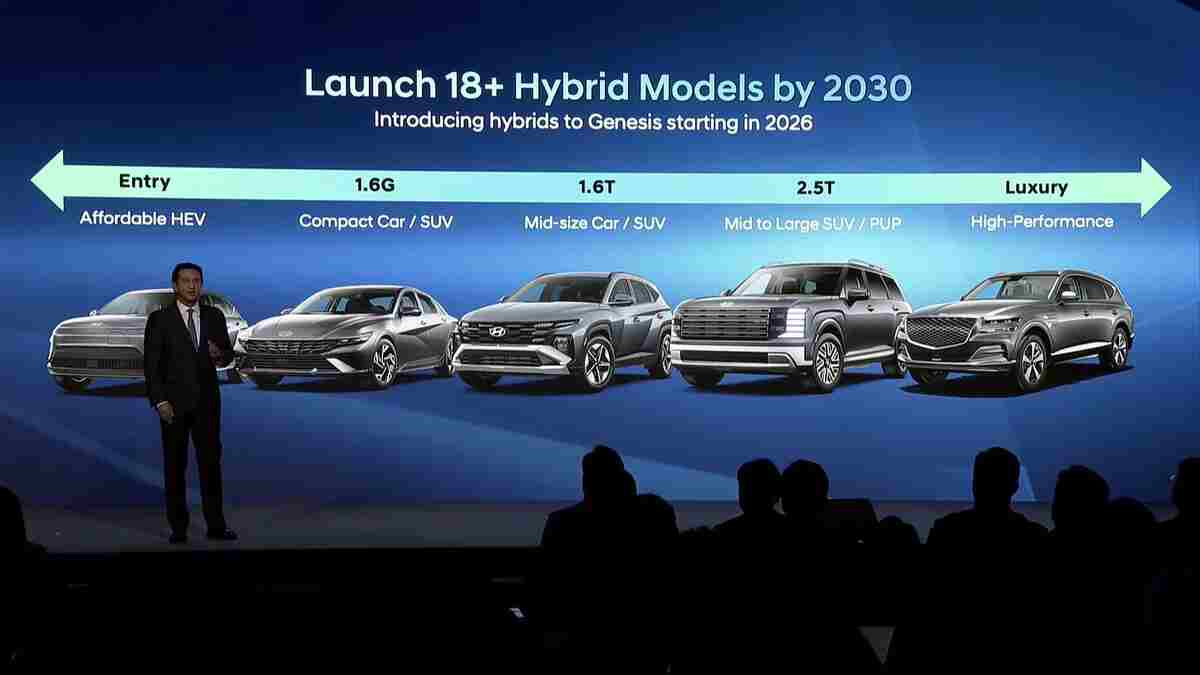
Hyundai is on the verge of its biggest product offensive ever as the South Korean carmaker plans to introduce over 100 new models around the globe by 2030. Under its ambitious plans, Hyundai intends to introduce 100 or more vehicles including new cars, crossovers and SUV models, hybrids and EVs into key markets around the world. The media briefing release came out in the middle of Hyundai Motor Company’s 2026 CEO Investor Day during which the company laid out its vision for long-term growth, production and profitability.
Hyundai is aiming for worldwide sales of 5.55 million cars by 2030 while seeking to increase its operating profit ratio to over 9%. The plan is not just about selling more vehicles; it is part of dramatic change for the company by providing its buyers with many options for their powertrain choices based on the country of use and need.
Something important of Hyundai’s strategy will be its growing emphasis on hybrids. The electric vehicle will still be important to Hyundai’s strategy, but the company is counting on the hybrid to remain relevant during the long drive to electric. Hyundai has already announced plans to introduce 10 new hybrids to North America and has set an aspirational target of nearly half of the region’s sales to be hybrids by 2030.
The products roll out of the company in major markets across the globe. North America will have 58 launches or refresh; Korea will have 49; the Europe having 41 while India and China will have 26 and 22 launches respectively.
Most new launches will be new vehicles or will allow Hyundai to enter new segments where it would have little or no presence currently. Because of this, the future Hyundai product portfolio could be very different from the buyers current preference. Already in the pipeline for the next few years are a handful of significant models.
Hyundai has announced development projects on an all-new Elantra, IONIQ 3, the next generation Tucson and Tucson Hybrid and a new electric SUV designed more exactly for the India market as well as a B-segment SUV for the world. Hyundai is also working on its first Santa Fe Extended-Range Electric Vehicle, or EREV, which will incorporate an electric powertrain and onboard range-extender system. The new Tucson is of particular importance because it is Hyundai’s highest-volume global model, with 10 million units sold cumulatively.
Hyundai claims the all-new Tucson and Tucson Hybrid will start to go on sale in early markets during Q4, and will be some of the first significant offerings in this broader international rollout. Hyundai will further develop its production infrastructure for the mass deployment of fuel cell vehicles. The company is aiming to have a global production capacity of up to 1.27 million units by 2030, including an additional 500,000 units in North America. Developing production closer to major markets may enable Hyundai to better meet local requirements, while also lowering its reliance on imported vehicles.
