
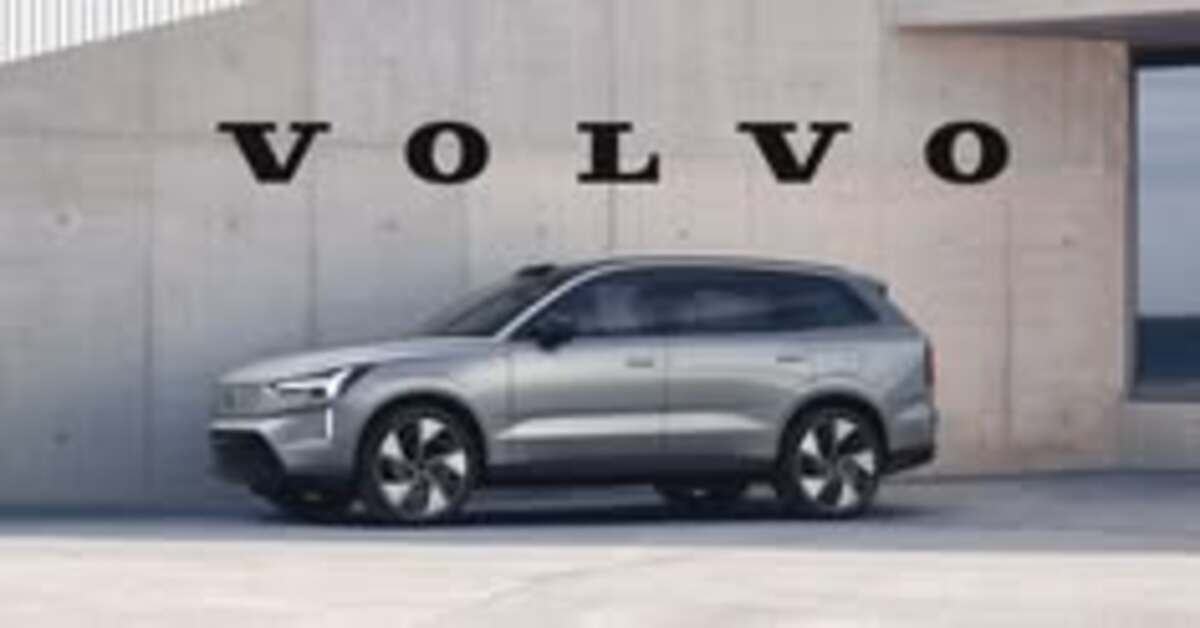
Volvo cars announced one of the most audacious product roadmaps of its almost century old history. In anticipation of an investor day in Stockholm, the swedish marque plans to introduce 13 all-new models through end of 2030, doubling its share of the market while improving operating margins to above 8 percent.
What is most interesting about this plan is the regional focus. Seven of these new vehicles will be marketed in western Europe and north America. They will be based on Volvo’s familiar SPA2 & 3 platforms, powered by the HuginCore architecture, helping to contain costs. The range will consist of both pure electric cars and third-generation hybrids. By 2030 the European offering should comprise a range of full-battery, electric-only models, ranging from raised high-body SUVs, to lower-body saloons and estates that will echo the classic look of Volvo cars. In north America, the emphasis will be on larger vehicles that suit local requirements.
The other six models are also in the pipeline, except they are China-specific, for the world’s largest car market. These are to be co-developed with Geely, the parent company, who will share common platforms and a separate Chinese technology stack. Closer hardware-origin relationships with Geely could boost parts commonality from today’s roughly 10 percent to 30 percent by 2030. This alone might bring around 5 percent in material cost savings, an important benefit when margins are so thin.
Volvo’s leadership is positioning it as an effort to also broaden the market it can address. It’s no longeras it once proclaimeda brand chasing a purely electric future at any cost. Having dropped its premature promise of only being able to sell battery-electric vehicles by 2030, it finds itself instead following the industry away from long-range electric vehicles in favor of actual electric vehicles that entrepreneurs and everyday drivers all experience what’s known as range anxiety. The latest updates to the XC60 and the XC90 already ended up increasing the electric-only range, and the latest models following that same theme will, just like its EV sales allowed in Europe, give consumers more options: “both the customers still wary of the changeover and ones who have already cracked the step to drive only electric cars.
The design direction is going home again. Thomas Ingenlath, the previous chief design officer, is back into production after extensive experience at Polestar, and one can expect to see far more focused yet still unique Scandinavian designed cars. The showrooms will look very different from the 2030 outlookmore extensive, and regionally differentiatedthere is a reason, ” said CEO Hkan Samuelsson.
It is also being flexible in its manufacturing choices. The company has indicated that it is ready to manufacture cars for other company at its plants in Chengdu, China, and Ghent, Belgium, and is ready to open talks with partners. This flexibility might be necessary to absorb the capacity and reduce the fixed costs when the new wave of products emerges.
