
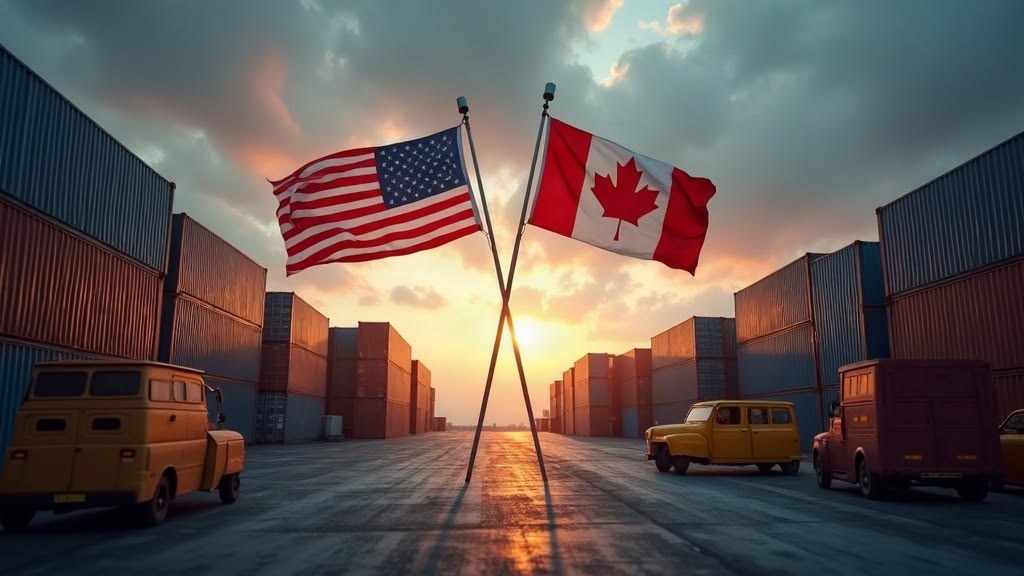
Canada has firmly entered the latest phase in the long-standing trade war with the United States. New fifteen to fifty percent retaliatory tariffs on some twenty billion dollars worth of American items came into force this week. Included in the list of retaliations are steel, household appliances, paper products, farming equipment, electronics and many more. The decision came after earlier American duties had already cut into cross-border trade. The Canadian reaction was hasbeen prudent but firm, insisting that the U.
S. not be allowed to act with impunity for fear of permanently damaging Canadian firms.. The scope of the specific American products targeted was designed to squeeze as much as possible without causing harm to Canadian consumers or processing sectors requiring American inputs. For importers it is a new, tangible cost.
For producers of finished goods, such as manufactures, that depend on imports of parts or inputs made in the U. S. this cost translates directly to a reduction of margin until saved or redistributed to retail. For other producers, like fresh-food farmers and food processors, it translates to a reduction in income as prices on dairy and agricultural equipment increase to what tends to be a new equilibrium. US-made consumer-electronics retailers are contemplating the shadow price on inventories, and how they will adjust pricing and stock levels so.
It will not be felt equally in every sector, but very few sectors that trade intently with the United States will be immune to the impacts. For typical families yet the change will be less abrupt. Some commodities of daily use will rise in cost over the coming months while the new tariffs find their way down the supply chain. Meanwhile, Canadian producers in some protected sectors could enjoy temporary, limited monopolistic power at home.
The government has announced that it will keep an eye on prices, and will be ready to modify policy if consumers begin to suffer excessively. But in the long-run, trade conflicts don’t seem to be capable of sparing the averages consumers entirely. The overall relations between the two countries are still complicated. In fact, Canada and the US are two of the largest trading partners in the world, built on complicated supply chains, energy flows, and integrated manufacturing. Many firms have plants on both sides and consider the two markets as a single production system.
The new tariff barriers come as a shock to them, and they need to reconsider their sourcing strategies, inventory decision, as well as long term investment plans. Some will hasten their plans to move their productions away from the US or look for other suppliers. Others will take the blow, and wait for the political safe harbor. Partisan commentary from each side’s position has become more intense, while each country has also started to frame the issue as a national matter.
In Canada, the tariffs are being justified as “a protection of national interests and a warning that Canadian interests should not be expected to be subverted in the United States’ current trade measures….”In the U.S. the Canadian action is considered “an unwelcome complication in an already strained commercial arena.” While negotiations are ongoing, the language from each side’s debate has become more aggressive. History gives mixed lessons. Past episodes of tariffs between the two foes led to negotiated settlements in the end, albeit after months of uncertainty and higher costs for businesses. This time round is still early days, markets are scrutinizing for any indication of talks leading to a way out.
